
Coordinating transportation for a corporate event in Los Angeles requires more than arranging a few rides. Event organizers need to account for guest arrival times, airport pickups, venue access, traffic, vehicle capacity, parking, and the possibility that meetings or presentations may run late.
The most effective approach is to build a transportation plan around the event schedule, identify which guests need individual transfers or group transportation, and assign a clear pickup and arrival process to every part of the itinerary. In Los Angeles, where business meetings and events may span several neighborhoods, realistic travel buffers and a centralized schedule are especially important.
Whether you are organizing a conference, executive meeting, client reception, company dinner, product launch, or multi-day business event, the right transportation plan can make the day easier to manage for both organizers and attendees.
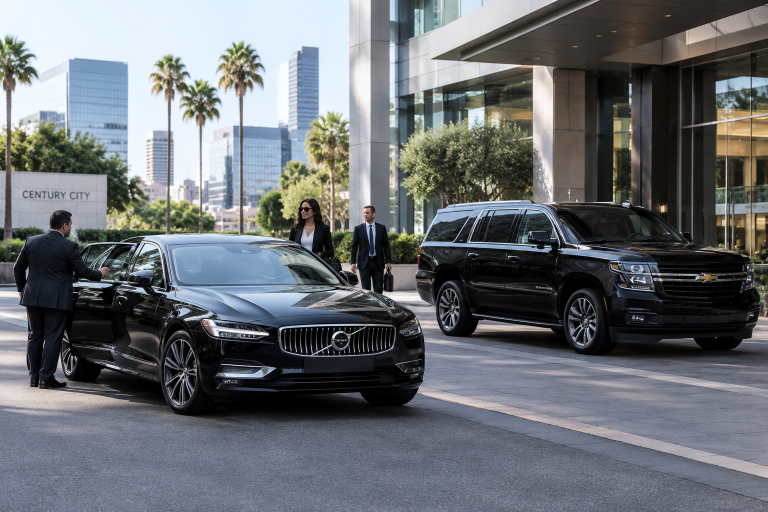
The first step is to understand who needs transportation, where they are going, and when they must arrive. Do this before choosing vehicles or requesting quotes.
Create a master transportation schedule that includes:
Event date and venue address
Event start and finish times
Guest names or group identifiers, where appropriate
Hotel and airport arrival details
Pickup addresses and requested departure times
Number of passengers in each group
Luggage requirements
Accessibility or mobility considerations
Return transportation requirements
A designated contact person for event-day changes
Separate confirmed details from information that is still pending. For example, an executive’s flight may be booked while a client’s hotel or arrival time remains unconfirmed.
Not every attendee requires the same arrangement. Divide the guest list into practical categories:
Executives and VIP guests: Senior leaders, keynote speakers, important clients, and guests with tight schedules may benefit from individually scheduled private transportation.
Employees and general attendees: A shared pickup or group transfer may work when several people are staying at the same hotel and traveling to the same venue. Ogun Limo’s group and event transportation options are worth reviewing when multiple attendees need coordinated transfers.
Out-of-town visitors: Guests arriving by air may need airport-to-hotel transfers, transportation between the hotel and venue, or both. Review Ogun Limo’s corporate transportation services when planning transportation for executives, clients, and visiting business guests.
Guests with specific mobility needs: Confirm the passenger’s requirements before selecting a vehicle. Do not assume that a standard sedan or SUV can accommodate every mobility device.
This classification helps prevent the common mistake of booking a vehicle that is too large for one trip but unsuitable for another.
Los Angeles is a large metropolitan area, and two locations that appear close on a map may require substantially different travel times depending on the route and departure period. A corporate event involving a hotel, airport, meeting venue, and dinner reservation should be planned as a sequence of trips rather than as isolated journeys.
Identify every location that matters to the itinerary, including:
Airports
Hotels
Conference centers
Corporate offices
Restaurants and reception venues
Off-site meeting locations
Parking or designated passenger-loading areas
The itinerary may cross several distinct business and visitor areas.
Downtown Los Angeles: Meetings near the Financial District, the Los Angeles Convention Center, or other downtown destinations can involve garage access, busy streets, and limited curb space. Confirm the appropriate drop-off point rather than relying on the venue’s general street address alone.
Century City and Beverly Hills: Corporate offices, hotels, and client meetings in these areas may be close geographically but can still require careful scheduling when several appointments are involved.
El Segundo and the LAX area: This area can be useful for events involving airport arrivals, nearby hotels, or businesses south of the airport. However, airport access roads and terminal traffic need to be considered separately from the distance to the airport.
Hollywood and West Hollywood: Receptions, client dinners, and entertainment-related business events may take place at venues where curb access, valet operations, and evening traffic affect pickup arrangements.
Santa Monica and the Westside: An event that combines an oceanfront hotel with a meeting in Century City or Downtown LA should include a realistic transfer window between locations.
Pasadena and Glendale: These destinations may be appropriate for corporate meetings or events outside central Los Angeles. If guests are moving between these areas and Westside venues, check the route and departure time instead of assuming the trip will be quick.
The goal is not to avoid every busy area. It is to recognize where travel time, parking, and passenger access could interfere with the schedule.
A transportation schedule should include more than the estimated time spent driving. It should also account for passenger loading, hotel pickup procedures, airport meeting arrangements, venue access, and the time needed for guests to reach their destination after being dropped off.
For each trip, plan for four stages:
Preparation: Confirm the pickup address, passenger count, vehicle assignment, and contact details.
Pickup: Allow time for guests to reach the vehicle and load luggage or event materials.
Travel: Estimate the route and expected traffic conditions for the actual departure time.
Arrival: Allow time for the vehicle to reach the designated entrance and for guests to enter the building or check in.
If a keynote speaker must be ready backstage at 8:30 a.m., do not schedule transportation to arrive at the venue at 8:30 a.m. Work backward from the time the speaker needs to be inside, checked in, and prepared.
The same principle applies to executives attending a board meeting or clients expected at a private reception.
Build additional flexibility into journeys involving airports, multiple pickups, important presentations, or a strict venue check-in time. Traffic conditions can change, and a route estimate should not be treated as a guarantee.
For current travel planning, consult LA Metro’s official rider information or the LADOT trip planner when public transportation may be a practical alternative for attendees.
A short hotel-to-venue transfer may need less planning flexibility than a trip from an airport to a conference with a fixed opening time. A multi-stop itinerary also needs additional time because one late departure can affect every subsequent appointment.
For example, if an executive has a morning meeting in Century City, a midday appointment in Downtown Los Angeles, and an evening reception in West Hollywood, plan each transfer around the appointment’s required arrival time. Do not simply add the same amount of driving time to every leg.
Recheck the itinerary as the event approaches, particularly when the schedule includes major venues, busy business districts, or airport transfers.
The best transportation arrangement depends on passenger count, itinerary complexity, budget, luggage, privacy requirements, and the importance of arriving together.
| Transportation option | Best suited for | Important considerations |
|---|---|---|
| Individual rideshare trips | Guests traveling independently with flexible schedules | Separate bookings, pickup coordination, and variable availability |
| Taxis | Individual or small-group point-to-point trips | Availability and the need to coordinate multiple vehicles |
| Rental cars | Guests with independent schedules or several destinations | Parking, navigation, rental procedures, and designated drivers |
| Public transportation | Guests traveling along suitable transit routes | Walking distance, transfers, luggage, and service schedules |
| Private sedan or SUV with a chauffeur | Executives, speakers, clients, and small groups | Passenger capacity, luggage, privacy, and scheduled pickups |
| Group transportation | Attendees traveling together on a common route | Vehicle capacity, pickup sequence, and coordinated departure times |
| Hourly chauffeur service | Executives or small groups with multiple stops | Booked duration, itinerary changes, and how waiting time is handled |
No option is ideal for every attendee. A mixed plan is often more practical than using one transportation method for the entire event.
For example, a company might arrange individual chauffeur-driven vehicles for executives and speakers, group transportation from a designated hotel for employees, and independent travel for local attendees.
A professional chauffeur service may be useful when guests have fixed arrival times, several appointments, important client-facing engagements, or a schedule that requires a vehicle to remain available between stops.
For a single transfer, a point-to-point booking may be sufficient. For a day involving an airport pickup, a business meeting, a restaurant reservation, and a return trip, an hourly arrangement may be worth considering.
Ogun Limo’s hourly chauffeur service is relevant to itineraries involving multiple stops. Before booking, confirm the available vehicle, booked duration, waiting-time terms, and how schedule changes are handled.
Review the actual itinerary before choosing. The most suitable service is the one that fits the transportation requirements, not necessarily the one with the most premium vehicle.
Corporate events in Los Angeles often involve attendees flying into different airports. Collect each guest’s arrival airport, flight number, scheduled arrival time, luggage requirements, and destination before assigning transportation.
The four airports that may be relevant to a Southern California corporate event include:
Los Angeles International Airport (LAX): Often relevant for international travel and many domestic itineraries serving the Los Angeles area.
Hollywood Burbank Airport (BUR): May be convenient for guests whose destinations are in Burbank, the San Fernando Valley, or nearby areas.
John Wayne Airport (SNA): An option for itineraries centered on Orange County or southern parts of the region.
Long Beach Airport (LGB): May be suitable for guests traveling to Long Beach and nearby destinations.
The right airport depends on flight availability, the guest’s origin, and the location of the event. Do not assume that every attendee should fly into LAX simply because the event is in Los Angeles.
For every airport transfer, maintain a record of:
Passenger name and contact information
Airline and flight number
Arrival airport and terminal information, when available
Scheduled arrival time
Number of passengers and bags
Hotel or venue destination
Pickup instructions and the designated contact person
Flight arrival time is not the same as the time a passenger will be ready to leave the airport. Guests may need to deplane, collect baggage, clear border formalities on international arrivals, and reach the appropriate pickup location.
Confirm the pickup procedure with the transportation provider and check current airport instructions. Terminal access, passenger pickup zones, and commercial transportation rules can vary.
For LAX, consult the airport’s official traffic and ground transportation information before finalizing pickup instructions.
Ogun Limo’s corporate transportation service lists airport transfer options for business travelers using LAX, Hollywood Burbank Airport, John Wayne Airport, and Long Beach Airport. Confirm the specific pickup arrangement and availability when requesting a quote.
If several executives are arriving on different flights, do not automatically place them on one shared transfer. A delayed flight could affect everyone else.
Instead, compare the expected arrival windows with the event schedule. Individual transfers may be more appropriate for guests with tight commitments, while shared transportation may work for people arriving close together with flexible schedules.
If an attendee’s flight changes, update the transportation coordinator and provider as soon as possible.
A transportation plan can fail even when the vehicle and travel time are appropriate if guests cannot identify where to meet the driver.
Hotels, office towers, convention centers, restaurants, and event spaces may have different rules for passenger loading. Some entrances are reserved for valet service, while others have designated commercial vehicle areas or limited curb access.
Before event day, confirm:
The exact pickup and drop-off location
Whether the vehicle can wait at the entrance
Whether a garage or designated loading zone is required
Any restrictions on vehicle size or access
The name of the hotel or venue contact, if applicable
Where guests should wait if the vehicle cannot stop directly outside
Send attendees clear instructions that include the building name, street address, entrance, pickup time, and a contact method for questions.
Avoid instructions such as “meet outside the hotel” when a property has several entrances or a large porte-cochère. A specific location reduces confusion and helps the group depart on time.
Vehicle selection should reflect the actual group, not just the number of people listed on the invitation.
A sedan may suit an executive traveling alone with a briefcase. An SUV may be more appropriate for a small group or passengers carrying substantial luggage. A Mercedes Sprinter or minibus may be worth considering when several attendees need to travel together, subject to the vehicle’s actual seating and luggage capacity.
Ogun Limo’s fleet page lists vehicles such as the Volvo S90, Cadillac Escalade, and Chevrolet Suburban, as well as larger transportation options. Confirm current availability, passenger capacity, luggage space, and suitability with the provider before assigning a vehicle.
Passenger capacity: Confirm the number of people each vehicle can legally and comfortably carry.
Luggage: Airport transfers may require more space than hotel-to-office trips.
Presentation materials: Banners, product samples, display equipment, and conference materials may affect luggage requirements.
Privacy: Executives may need a separate vehicle for confidential calls or uninterrupted travel.
Accessibility: Confirm the specific accommodations required and whether the assigned vehicle can provide them.
Arrival coordination: Several smaller vehicles may be more practical than one larger vehicle when guests have different pickup times or destinations.
Do not assume that the largest vehicle is automatically the most efficient choice. Vehicle capacity, route, pickup sequence, and schedule all matter.
A transportation run sheet is the central document for the event’s ground transportation. It gives organizers and authorized transportation contacts one consistent reference for pickup times, locations, passengers, vehicles, and changes.
A useful run sheet should include:
| Field | What to record |
|---|---|
| Trip ID | A unique reference for each transfer |
| Passenger or group | The relevant guest, team, or group |
| Pickup | Exact address and meeting point |
| Destination | Venue, hotel, office, or airport |
| Pickup time | Confirmed scheduled time |
| Passenger count | Number of people traveling |
| Luggage | Expected bags or special items |
| Vehicle assignment | Confirmed vehicle or service type |
| Contact person | Authorized event coordinator or passenger contact |
| Status | Pending, confirmed, changed, or completed |
| Notes | Access instructions and relevant requirements |
Keep the master document accessible to the people responsible for coordinating transportation. Limit personal information to what is necessary and share it only with authorized contacts.
For a larger event, assign one transportation lead who can communicate with the venue, hotel, guests, and service providers. This is usually easier to manage than allowing every attendee to make separate changes without a central point of contact.
Corporate schedules often change throughout the day. A keynote speaker may have a media interview before a presentation, an executive may need to visit another office, or a client meeting may run longer than expected.
For a multi-stop itinerary, organize the route around fixed appointments first. Then group nearby destinations where practical and leave enough flexibility for delays.
For example, an executive itinerary might include:
Morning pickup at a hotel near LAX
A meeting in El Segundo
A lunch appointment in Century City
An afternoon meeting in Downtown Los Angeles
An evening reception in West Hollywood
This schedule crosses several parts of the metropolitan area. It should not be planned using only the straight-line distance between destinations. Each departure time, likely route, parking or loading arrangement, and required arrival time must be considered.
When several stops are involved, an hourly chauffeur arrangement may offer more flexibility than booking a separate one-way ride for each leg. Ogun Limo explains the distinction in its guide to hourly chauffeur service versus one-way rides in Los Angeles.
Confirm the booked hours, waiting-time terms, and process for changing the itinerary before making the reservation.
If a schedule is too tight to allow realistic travel time, consider moving an appointment, changing the order of stops, or using a remote meeting for one part of the day.
Corporate transportation costs depend on the specific itinerary and booking terms. The useful comparison is the total cost of completing the transportation plan, not just the quoted price of one vehicle.
When requesting quotes, ask providers to clarify:
Whether the service is point-to-point or hourly
The booked duration and any minimum booking period
Whether waiting time is included
How additional stops are handled
Whether airport fees, parking, tolls, or other charges apply
The policy for itinerary changes or cancellations
The number and type of vehicles included
Whether the quote covers every required transfer
Whether gratuity is included or handled separately
Do not assume that a single group vehicle is always less expensive than several smaller vehicles. A large vehicle may require a longer booking or may not suit guests arriving at different times. Conversely, multiple individual rides can create more coordination work and make it harder to keep a group on schedule.
Compare quotes using the same passenger counts, destinations, hours, stops, and service requirements. This makes the differences easier to understand and reduces the risk of selecting an option that appears inexpensive but does not cover the full itinerary.
For a tailored quote, use Ogun Limo’s reservation page and provide the event date, pickup and destination details, passenger count, and expected schedule.
Even a well-organized event can experience flight delays, traffic disruptions, last-minute guest changes, or an extended meeting. The goal is to decide in advance how these changes will be handled.
A practical contingency plan should identify:
The transportation coordinator and backup contact
The process for reporting flight or schedule changes
Which trips have fixed arrival deadlines
Which passengers can share transportation if necessary
Whether additional time or service hours can be requested
What to do if a guest misses the planned pickup
How updates will reach the affected passengers
Do not promise a replacement vehicle or guaranteed arrival unless the provider has explicitly confirmed that arrangement.
For important arrivals, consider the consequences of a delay and avoid relying on a single narrow timing window. A speaker who must be ready before a conference begins may need an earlier pickup than an attendee going to a flexible networking session.
Guests should not have to search through long email threads to find their pickup instructions. Send a concise transportation message before the event and provide updates when a detail changes.
A useful confirmation includes:
Date and pickup time
Pickup address and exact meeting point
Destination
Passenger or group assignment
Contact details for transportation questions
Relevant luggage or accessibility arrangements
Instructions for reporting delays or missed pickups
For executives and VIP guests, provide individual instructions when privacy or personalized coordination is appropriate. For larger groups, send a shared itinerary that clearly identifies the relevant pickup group and departure time.
On event day, keep changes centralized. If a dinner venue changes or a meeting runs late, the transportation lead should communicate the revision to the relevant provider and passengers rather than assuming everyone will see an updated calendar invitation.
Several preventable mistakes can create delays and unnecessary costs.
Planning around distance instead of departure time. A route that looks short may take longer during a busy period. Estimate travel time for the actual time of day.
Booking vehicles before confirming passenger needs. A group may have more luggage, equipment, or accessibility requirements than expected.
Using vague pickup instructions. A hotel or venue may have multiple entrances and restricted loading areas. Specify the exact meeting point.
Combining guests with incompatible schedules. Shared transportation works best when passengers have compatible arrival times and destinations.
Ignoring airport exit time. A flight’s scheduled landing time does not mean the passenger will be immediately ready for pickup.
Leaving no flexibility for schedule changes. Meetings run late, guests arrive early, and flight times change. Establish a clear process for updates.
Comparing quotes with different inclusions. Check booked hours, waiting time, stops, parking, tolls, and other applicable charges.
Failing to assign a transportation lead. A single point of contact can make communication more consistent and reduce duplicated instructions.
Use this checklist before confirming the transportation plan:
Confirm the event date, venue, and full schedule.
Finalize the guest list and identify who requires transportation.
Collect relevant hotel, flight, pickup, and destination details.
Group passengers by schedule, route, and transportation needs.
Confirm vehicle capacity, luggage space, and accessibility requirements.
Check pickup and drop-off procedures with hotels and venues.
Estimate travel time for each departure period and add appropriate buffers.
Compare quotes using the same itinerary and service requirements.
Confirm booking terms, changes, waiting time, and cancellation policies.
Create and distribute the transportation run sheet.
Share clear pickup instructions with each passenger or group.
Designate an event-day transportation lead and backup contact.
Reconfirm important details before the event.
Organizing transportation for a business event in Los Angeles may involve executive pickups, airport transfers, travel between meetings, and transportation to a reception or dinner. A plan that accounts for the full itinerary can help event organizers coordinate these moving parts more effectively.
Ogun Limo offers corporate transportation services in Los Angeles. Depending on the event’s requirements and availability, organizers can discuss options for executive travel, airport transfers, and transportation involving multiple stops.
To explore the available options, review Ogun Limo’s transportation services or visit the reservation page to request a quote. Share the event date, destinations, passenger count, and schedule so the transportation requirements can be evaluated accurately.
Successful corporate event transportation in Los Angeles starts with a clear itinerary, realistic travel planning, appropriate vehicle selection, and consistent communication. By coordinating airports, hotels, venues, passenger groups, and contingency arrangements in advance, organizers can reduce confusion and make the event easier for guests to navigate.
If your company is planning a meeting, conference, client event, or executive itinerary in Los Angeles, review Ogun Limo’s corporate transportation options or request a quote to discuss a suitable transportation arrangement.
Start with a master guest list and event schedule, group passengers by destination and arrival time, and choose transportation based on passenger count, luggage, and itinerary complexity. Confirm venue pickup procedures, allow realistic travel buffers, and appoint one person to coordinate changes.
Book as soon as the event schedule, passenger requirements, and key pickup times are sufficiently clear. Larger events, busy dates, multiple vehicles, and airport transfers may require more lead time, so confirm availability with providers rather than relying on a universal booking deadline.
Not necessarily. Prioritize airport transfers for executives, speakers, clients, and attendees whose schedules or unfamiliarity with the area make coordinated pickup useful. Other guests may prefer taxis, rideshare, rental cars, or public transportation, depending on their destination and schedule.
The most suitable airport depends on flight availability and the event's location. LAX serves many itineraries for the Los Angeles area, while Hollywood Burbank Airport, John Wayne Airport, and Long Beach Airport may be useful for destinations closer to those airports. Compare the complete itinerary before deciding.
A chauffeur service may be useful when executives or clients have fixed appointments, need private transportation, or must visit several destinations during the day. For flexible, independent trips, public transportation, taxis, rideshare, or rental cars may be more appropriate.
Hourly service can make sense when a vehicle needs to remain available during multiple appointments or stops. Separate point-to-point rides may suit a simple transfer with a clear destination. Compare the itinerary, booked hours, waiting-time terms, and additional charges before deciding.
Collect passenger counts and destinations, identify common hotel or venue routes, and determine which groups can travel together. Confirm vehicle capacity and loading arrangements, publish a shared run sheet, and designate a coordinator who can communicate changes.
Provide the event date, pickup and destination addresses, requested times, number of passengers, luggage requirements, number of stops, airport or flight details when relevant, and any accessibility needs. Also explain whether you need a one-way transfer, round trip, or vehicle availability over several hours.