
Traveling around Los Angeles with a pet requires more planning than simply choosing a destination. Distances between neighborhoods can be significant, traffic can make short journeys take longer than expected, and not every transportation provider or vehicle can accommodate animals.
The best way to travel around Los Angeles with a pet depends on your animal’s size, temperament, carrier requirements, itinerary, and the number of stops you plan to make. For some trips, a personal vehicle or rental car offers the most flexibility. For others, a prearranged private car with a professional chauffeur may be a practical option, provided the provider confirms its pet policy before the ride.
Whether you are visiting Beverly Hills, spending an afternoon in Santa Monica, traveling between hotels, or arranging transportation to or from Los Angeles International Airport (LAX), a little preparation can make the journey more comfortable for both you and your pet.
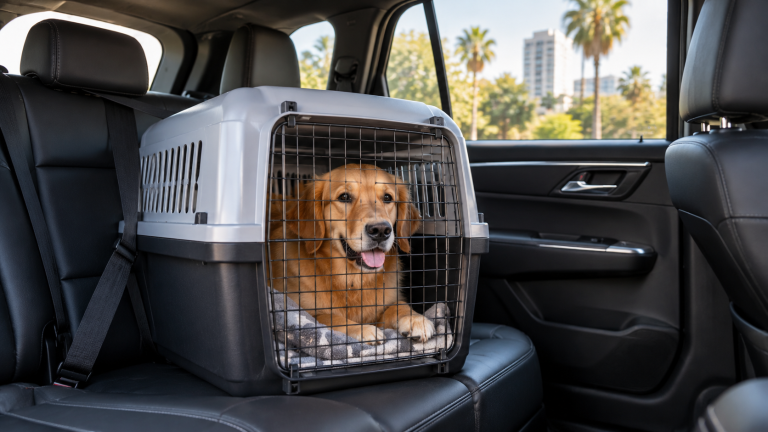
There is no single transportation option that works for every pet owner in Los Angeles. A small dog that is comfortable in a carrier has different needs from a large dog traveling with a family, and a direct airport transfer requires different planning from a full day of sightseeing.
Consider these options before arranging your trip:
Private car or chauffeur service: Worth considering when you want a prearranged pickup, a direct route, or several stops. Confirm that pets are accepted and discuss the animal’s size and restraint requirements in advance.
Rental car: Offers flexibility and control over the environment, particularly for longer trips or destinations outside central Los Angeles. Check the rental company’s animal and cleaning policies.
Rideshare: May be convenient for a short trip, but pet acceptance can depend on the service, ride option, driver, and applicable policy. Confirm before requesting or entering the vehicle.
Taxi: Availability and pet acceptance can vary. Contact the taxi provider before the journey rather than assuming an animal will be accepted.
Public transportation: Can be useful for some routes, but Los Angeles Metro requires ordinary pets to be secured in enclosed carriers. This may not be practical for larger animals.
For a pet owner with a planned itinerary, the most important question is not simply which option is fastest. It is which option can accommodate the animal safely and reliably for the entire journey.
Private transportation can be a practical choice when you need a direct trip, have luggage, or want to coordinate multiple destinations without repeatedly arranging separate rides.
Unlike public transportation, a prearranged private ride can be discussed with the provider before the pickup. That gives you an opportunity to explain the type and size of your pet, the carrier or restraint you plan to use, and any special considerations.
However, do not assume that every private car or chauffeur service automatically accepts pets. Pet policies may vary by provider, vehicle, animal, and trip. Always obtain confirmation before booking.
A private car or chauffeur service may be worth considering when:
You are traveling with a pet and several pieces of luggage.
You need transportation between an airport and a hotel.
Your itinerary includes multiple destinations in different parts of Los Angeles.
You prefer to arrange pickup and drop-off details in advance.
Your pet is more comfortable in a quieter, direct journey than in a crowded public environment.
You are traveling with family members who also need space for bags, strollers, or other equipment.
For example, a visitor staying in Beverly Hills who plans to visit West Hollywood and Santa Monica in one afternoon may prefer to coordinate transportation in advance rather than arrange a new ride at every stop.
For trips that involve several destinations or a flexible schedule, compare the available options for hourly chauffeur service. Before making a reservation with any provider, ask specifically whether your pet can travel in the selected vehicle.
A comfortable journey begins before the vehicle arrives. Even a relatively short drive can become stressful if your pet is unfamiliar with car travel, has no secure place to rest, or is exposed to excessive heat.
Choose a carrier or vehicle restraint suitable for your animal’s size and needs. Small dogs and cats may be more comfortable in a secure, well-ventilated carrier. Larger dogs may require a suitable vehicle harness or another restraint designed for car travel.
A pet should not be allowed to move freely around the cabin while the vehicle is in motion. An unrestrained animal can distract the driver, interfere with vehicle controls, or be injured during sudden braking.
Before departure:
Make sure the carrier is secure and has adequate ventilation.
Check that your pet can sit, stand, and turn around comfortably when the carrier design allows.
Use a properly fitted vehicle restraint for animals that travel outside carriers.
Bring a familiar blanket or small comfort item.
Keep leashes and harnesses accessible for stops.
Never place a carrier where it can obstruct the driver or interfere with airbags.
If you are using a private transportation provider, ask where the carrier or restraint can safely be positioned. Do not assume that a particular seating arrangement is available.
Keep essential supplies together so you do not have to search through luggage during a stop.
A useful travel kit may include:
Drinking water and a portable bowl
Regular food and treats
Leash, harness, and identification
Waste bags
Paper towels and cleaning supplies
Medication, if applicable
A familiar blanket or toy
Copies of relevant veterinary or vaccination records when needed for your travel plans
For cats, include an appropriate carrier and consider how you will manage litter needs during a longer journey. For dogs, plan opportunities to walk and relieve themselves.
Los Angeles has a generally mild climate, but temperatures can become high, especially during summer and in inland areas such as Pasadena and Glendale. A parked vehicle can become dangerously hot even when the outside temperature does not seem extreme.
Never leave a pet unattended in a parked vehicle. Plan stops around your animal’s needs, and make sure water and ventilation are available during the journey.
Los Angeles is a large metropolitan area, and traveling with a pet makes realistic scheduling particularly important. A route that looks short on a map may involve freeway congestion, difficult parking, or several minutes of walking between the vehicle and the destination.
When planning a trip, consider the locations of your stops rather than treating Los Angeles as one compact tourist area.
These destinations are relatively close to one another, but traffic on major streets can slow down during busy periods. Rodeo Drive, Melrose Avenue, and the Sunset Strip may involve limited curb access, parking challenges, and pedestrian activity.
If you are traveling with a pet, identify suitable places to stop and check each destination’s animal policy before arriving. Do not assume that a store, restaurant, hotel, or attraction allows pets inside.
Santa Monica can be a convenient destination for visitors who want to spend time near the coast. However, beach access, parking, and local rules can affect where you can go with your animal.
Check the official rules for the specific beach, park, or public area you intend to visit. A destination being outdoors does not automatically mean pets are allowed in every section.
Hollywood attractions can be spread across busy streets, while Griffith Park covers a large area with different access points. If you plan to visit both, avoid assuming that one parking location will be convenient for the entire outing.
For a pet-friendly itinerary, check trail and park rules before setting out. Keep your animal leashed wherever required and bring water, particularly on warm days.
Downtown Los Angeles includes hotels, restaurants, cultural destinations, and business districts. A pet owner staying downtown may need transportation to destinations in other parts of the city, such as Beverly Hills, Century City, or Santa Monica.
If you have several appointments or stops, group destinations geographically where possible. This reduces unnecessary backtracking and makes it easier to schedule breaks for your pet.
Airport transportation requires additional coordination because you must manage your animal, luggage, terminal access, and pickup arrangements at the same time.
The main commercial airports relevant to many Los Angeles-area trips include:
Los Angeles International Airport (LAX)
Hollywood Burbank Airport (BUR)
Long Beach Airport (LGB)
John Wayne Airport (SNA), in Orange County
Before booking ground transportation, confirm that the provider accepts your pet and clarify where the pickup will take place.
LAX is a large airport with busy terminal roads and designated pickup arrangements. Do not assume that your driver can wait directly outside any terminal entrance or stop wherever it is most convenient.
Coordinate the meeting point and communication method before landing. Share your terminal, airline, arrival details, and a working phone number with your transportation provider.
LAX also provides animal relief areas. The airport’s official information identifies relief stations in terminal areas, including locations before and after security. Check the current airport map and terminal information because the most convenient location depends on where you are in the airport.
Official information: LAX animal relief stations and accessibility information.
Travelers arriving at Hollywood Burbank Airport, Long Beach Airport, or John Wayne Airport should check the relevant airport’s current animal relief facilities and ground transportation instructions.
Do not assume that pickup procedures, curb access, or pet facilities are identical at all four airports.
If you are traveling from an airport to a hotel in Los Angeles, consider the distance to your final destination and whether your pet will need a break after the flight. A direct transfer may be more convenient than adding unnecessary stops, but the animal’s comfort should guide the schedule.
For airport journeys, review the company’s airport transportation services and confirm pet acceptance before requesting a reservation.
Public transportation can be a useful alternative for some travelers, but pet rules matter.
According to Los Angeles Metro, ordinary pets and emotional support animals must be secured in enclosed carriers on Metro buses and trains. Carriers must not block aisles or doorways or interfere with other passengers. Service animals are subject to different rules and must remain under the handler’s control.
This distinction is important: a pet traveling in a carrier is not the same as a service animal traveling with a person with a disability.
Review the official guidance before your trip:
For travelers with larger dogs, multiple animals, or pets that cannot comfortably remain in an enclosed carrier, public transit may not be a suitable option. In those situations, a personal vehicle or a private transportation provider that has explicitly agreed to accommodate the animal may be more practical.
The right vehicle depends on more than the number of passengers. Consider the pet’s size, carrier dimensions, luggage volume, and how much room the animal needs to travel securely.
For example:
Sedan: May work for one or two passengers with a small pet carrier and limited luggage, subject to available space and the provider’s policy.
SUV: May offer more cargo flexibility for families, larger carriers, and additional luggage.
Mercedes Sprinter or minibus: May be worth discussing for larger groups, but passenger capacity does not automatically mean that a pet can be accommodated safely.
Do not select a vehicle based only on its exterior size. Ask the provider to confirm the usable interior space and whether the animal can be secured appropriately.
If you are considering Ogun Limo, its fleet information can help you identify vehicle categories to ask about. The company may offer vehicles such as the Volvo S90, Cadillac Escalade, Chevrolet Suburban, Mercedes Sprinter, and minibus. Pet acceptance and suitable arrangements must be confirmed directly with the company before booking.
A short conversation before the reservation can prevent misunderstandings on the day of travel.
Ask the transportation provider:
Are pets accepted on this specific trip?
Are there restrictions based on the animal’s size, type, or number?
Must the pet remain in an enclosed carrier?
Can a larger dog travel with an appropriate vehicle restraint?
Which vehicle will be assigned, and is there enough usable space?
Can the itinerary include planned stops for water and bathroom breaks?
Are there any cleaning requirements or additional charges?
Where will the pickup take place, especially at an airport?
Should you bring any particular equipment or documentation?
Be specific when describing your animal. “I am traveling with a pet” may not provide enough information for a provider to confirm the arrangement. A more useful description includes the animal’s type, approximate size, carrier dimensions, and whether it will travel inside a carrier or with a vehicle restraint.
A few avoidable mistakes can make a trip more stressful than necessary.
Assuming every ride accepts animals. Pet policies vary. Confirm acceptance before booking a rideshare, taxi, rental car, or private vehicle.
Leaving transportation arrangements until the last minute. This can limit your options, particularly when you need a larger vehicle or have a specific pickup time.
Planning too many destinations in one day. A packed itinerary can leave little time for water, bathroom breaks, or rest. Allow flexibility between stops.
Ignoring the destination’s pet rules. A pet may be allowed in an outdoor area but not inside nearby shops, restaurants, attractions, or buildings. Check each destination individually.
Choosing a vehicle without considering the carrier. A carrier that fits at home may take up more space than expected when combined with passengers and luggage.
Leaving a pet alone in a parked car. Never treat a vehicle as a safe place to leave an animal while visiting an attraction or running an errand.
Failing to plan airport pickup details. Confirm the terminal, meeting point, and communication plan before the flight arrives.
Imagine a visitor staying near Beverly Hills who wants to spend part of the day in West Hollywood and later travel to Santa Monica with a dog.
A practical plan would be to:
Confirm that the transportation provider accepts the dog and agree on the vehicle and restraint arrangement.
Start with destinations in Beverly Hills and West Hollywood, rather than crossing the city repeatedly.
Check which outdoor areas, shops, and restaurants permit pets.
Schedule a suitable break before continuing toward Santa Monica.
Confirm parking or drop-off arrangements near the final destination.
Keep water, a leash, waste bags, and other essentials accessible throughout the day.
If the dog is not comfortable spending extended periods in a vehicle, reduce the number of stops and avoid turning the outing into a full-day sightseeing schedule.
The same planning principle applies to cats and other pets: build the itinerary around the animal’s needs, not just the number of places you want to visit.
Traveling around Los Angeles with a pet is manageable when transportation, route planning, and destination rules are considered in advance. A personal or rental car may offer the most control, public transportation can work for animals that meet carrier requirements, and private transportation may be convenient for direct trips or multi-stop itineraries when the provider confirms that pets are accepted.
If you are considering a private ride, contact the transportation company before booking. Explain your pet’s size, carrier or restraint arrangement, luggage needs, and planned route.
Ogun Limo provides private transportation options in the Los Angeles area. If you would like to discuss an airport transfer or a trip around the city with your pet, contact the company in advance to confirm whether your animal can be accommodated and which vehicle may be appropriate.
Visit Ogun Limo or call 877-416-9696 to discuss your transportation needs.
Yes, if the transportation provider agrees to accept the dog and the animal can be accommodated safely. Confirm the pet policy, vehicle space, and required restraint before booking.
Ordinary pets must be secured in enclosed carriers on LA Metro buses and trains. The carrier cannot block aisles or doorways. Service animals are subject to separate rules. Check Metro's current rider guidance before traveling.
You can ask a chauffeur company whether it accepts pets, but acceptance should never be assumed. Explain your pet's size, carrier or restraint arrangement, and trip details before confirming the reservation.
Yes. LAX provides animal relief stations, including locations before and after security. Their locations vary by terminal, so check the airport's official information and map before traveling.
An SUV may provide more usable space than a sedan, but the correct choice depends on the dog's size, restraint arrangement, passengers, and luggage. Confirm the vehicle's interior space and pet policy with the provider.
You may be able to visit certain outdoor public areas with a pet, but rules differ by location and business. Check the specific beach, park, restaurant, store, or attraction before arriving.
Yes. Advance planning gives you time to confirm that pets are accepted, discuss vehicle suitability, coordinate pickup details, and arrange any necessary stops.
No. A parked vehicle can become dangerously hot, even when the weather feels mild. Never leave your pet unattended in a parked car.