
Getting around Los Angeles during peak traffic hours can be one of the biggest challenges for both visitors and residents. A short trip across the city can suddenly take much longer than expected, especially during weekday commute periods, major events, accidents, or busy weekends.
The good news is that you don’t have to let LA traffic ruin your day. With better timing, smarter route planning, and the right transportation option, you can move around Los Angeles more efficiently and avoid many of the frustrations associated with heavy traffic.
This guide explains how to get around Los Angeles during peak traffic hours, when traffic is usually worst, which transportation options make the most sense, and how to plan your trips more effectively.
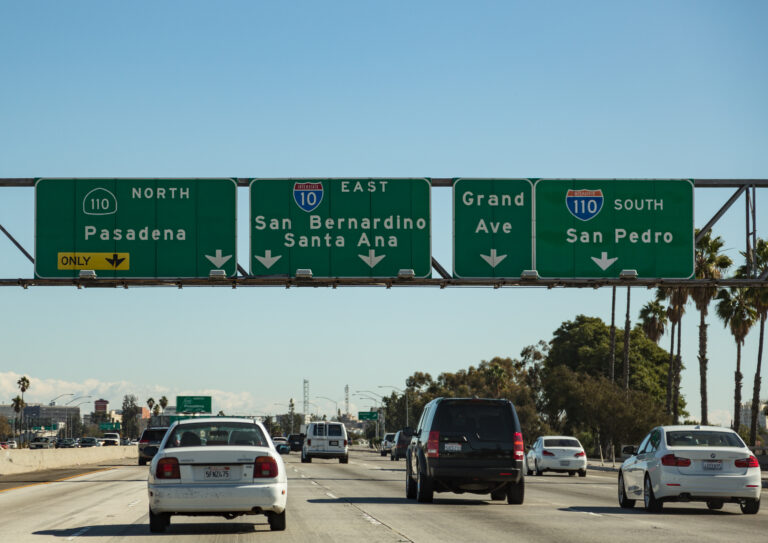
Los Angeles is a large metropolitan area with a transportation network that serves millions of daily trips. When demand becomes greater than available road capacity, congestion builds quickly.
Traffic can become particularly difficult during weekday commuting periods, when people are traveling to work and school. LA Metro has historically identified weekday morning and afternoon/evening periods as peak travel windows, and its current service planning continues to make adjustments around demand and reliability.
Traffic can also increase because of:
This means there isn’t a single route that is always the fastest. The best strategy is to plan around when and where you are traveling.
For most travelers, the most important thing is understanding the general pattern of LA rush hour.
Weekday mornings are typically busiest as commuters travel toward major employment centers.
A practical planning window is approximately:
6:00 AM to 9:00 AM
Traffic can become especially challenging around major freeways and routes leading toward Downtown Los Angeles, Century City, Santa Monica, West Los Angeles, and other major employment areas.
The afternoon commute can be even more unpredictable.
A useful planning window is approximately:
3:00 PM to 7:00 PM
LA Metro has used weekday afternoon/evening peak periods in this general range when planning service around commuter demand.
However, don’t assume traffic suddenly disappears at 7:00 PM. Depending on the location, traffic can remain heavy later, particularly when there is an event or accident.
One of the most common mistakes tourists make in Los Angeles is looking at the distance between two destinations and assuming the trip will be quick.
For example, two destinations may only be 10 or 15 miles apart.
That doesn’t necessarily mean you’ll get there in 20 minutes.
During peak traffic, the same journey can take significantly longer.
Instead of asking:
“How far is it?”
Ask:
“What time will I be traveling?”
This simple change in planning can make a huge difference.
There isn’t one transportation method that works for everyone. The best option depends on your destination, schedule, group size, and how much convenience you want.
Public transportation can be a smart alternative to sitting in traffic.
LA Metro operates an extensive network of buses and rail services throughout Los Angeles County. Its current system includes Metro Bus, Metro Rail, Metro Bike, Metro Micro, and other transportation options.
Rail can be particularly useful when your origin and destination are connected by a convenient line because trains aren’t affected by roadway congestion in the same way cars are.
Consider public transportation when:
Metro also provides trip-planning tools, real-time arrival information, alerts, and route information to help passengers plan their journeys.
For visitors, however, public transportation isn’t always the most convenient solution, particularly when traveling with luggage, children, or multiple passengers.
For travelers who need comfort, convenience, and a predictable experience, a private car service can be a practical option during busy periods.
Instead of driving yourself, a professional chauffeur handles the road while you focus on your schedule.
This can be particularly useful for:
A chauffeur service won’t make LA traffic disappear, but it can make the experience considerably less stressful.
You don’t have to search for parking, constantly check navigation, or worry about driving through unfamiliar parts of the city.
Uber and Lyft can be convenient for getting around Los Angeles, especially for short trips.
However, rideshare isn’t always the fastest or most predictable solution during peak demand.
Possible challenges include:
If you’re using rideshare, avoid scheduling important reservations with almost no time buffer.
For an important meeting, flight, wedding, or event, pre-arranged transportation can provide greater peace of mind.
Sometimes the easiest way to avoid traffic is simply to change your schedule.
If you have flexibility, consider moving your trip earlier or later.
For example, instead of leaving during the middle of afternoon rush hour, you could:
This strategy is particularly useful for tourists who don’t have to follow a fixed schedule.
If you’re visiting Los Angeles, one of the best ways to reduce time in traffic is to stop crossing the entire city repeatedly.
Los Angeles is geographically spread out, so build your itinerary around neighborhoods.
You could combine:
Instead of traveling from Santa Monica to Downtown LA and then back to the coast.
Combine:
Consider grouping:
This strategy can save hours over the course of a trip.
Navigation apps often recommend different routes depending on current conditions.
During heavy traffic, however, constantly changing routes can sometimes make a trip more complicated rather than faster.
If you’re driving yourself, check traffic before leaving and choose a reasonable route rather than constantly reacting to every small change.
A professional chauffeur who regularly operates throughout Los Angeles can also help determine practical routes based on current conditions and the destination.
Airport transportation requires special planning because missing a flight can have serious consequences.
If you’re traveling to or from Los Angeles International Airport during peak traffic, don’t calculate your journey based on the best-case travel time.
Give yourself a substantial buffer for:
For travelers using public transportation, LA Metro currently provides connections to the LAX/Metro Transit Center, with a free shuttle connecting the transit center to the airport terminals.
For travelers with luggage or families, a pre-arranged private airport transfer can provide a more direct alternative.
Checking traffic immediately before departure is one of the easiest ways to improve your travel planning.
Don’t rely exclusively on a map’s estimated travel time from several hours earlier.
Check conditions shortly before leaving and look for:
LA Metro also provides real-time arrivals, service alerts, and trip-planning tools for public transportation users.
Traffic can become significantly worse around major sporting events and concerts.
Popular venues include:
If you’re attending an event, don’t plan your transportation around the normal traffic conditions of that neighborhood.
Thousands of additional people may arrive at approximately the same time.
Instead:
If your day involves several destinations, an hourly chauffeur service can be more convenient than booking separate rides.
For example, a business traveler might need to visit:
Instead of arranging individual rides for every destination, an hourly chauffeur can remain available throughout the itinerary.
This can be especially useful when your schedule is flexible or when you need transportation between several meetings.
If you’re visiting Los Angeles for the first time, a few simple strategies can make your trip much easier.
If you’re primarily interested in the beach, staying near Santa Monica or Venice can reduce unnecessary driving.
If Hollywood is your priority, staying closer to Hollywood can make sightseeing easier.
You don’t necessarily need to stay in the exact neighborhood of every attraction, but choosing your hotel strategically can save considerable travel time.
Leave extra time between activities.
If your restaurant reservation starts at 7:00 PM, don’t plan to arrive at the restaurant at 6:55 PM after traveling across the city.
Give yourself a buffer.
Popular attractions can become crowded later in the day.
Starting earlier can help you avoid both crowds and some of the worst traffic.
The same principles apply to people who live in Los Angeles.
If your schedule allows, consider:
LA Metro also supports rideshare and carpool programs designed to reduce the number of people driving alone and help reduce congestion.
Sometimes, yes.
If a rail line takes you directly to your destination, public transportation can be an excellent alternative to sitting in traffic.
But it depends heavily on your itinerary.
Public transportation may be less convenient when you’re:
The best transportation method is the one that fits your specific trip.
For many travelers, the value isn’t simply about getting somewhere faster.
It’s about eliminating the stress associated with driving.
With a private chauffeur, you can:
This can be especially valuable for executives, families, tourists with limited time, and visitors attending important events.
One unexpected accident can completely change your arrival time.
Navigation apps estimate travel times based on available data. Conditions can change quickly.
Plan your itinerary geographically.
A concert or sporting event can dramatically change traffic around a venue.
Even if the drive itself isn’t terrible, finding parking can add significant time to your trip.
Give yourself a buffer between activities.
The smartest approach is not necessarily finding a magical route that avoids every traffic jam.
Instead, combine several strategies:
Plan the time + choose the right transportation + group destinations + leave a buffer.
That combination can make a significant difference in how you experience Los Angeles.
Traffic is an unavoidable part of life in a major metropolitan area, but being stuck in traffic doesn’t have to dominate your trip.
Learning how to get around Los Angeles during peak traffic hours can make your visit dramatically more enjoyable.
The key is understanding that LA transportation is about more than simply choosing a route. Timing, location, parking, events, transportation options, and flexibility all matter.
For tourists, grouping attractions by neighborhood and avoiding unnecessary cross-city trips can save valuable time. For business travelers, scheduling transportation in advance can make meetings more predictable. And for families, eliminating parking and navigation stress can make the entire experience more comfortable.
When you combine smart planning with reliable transportation, you can experience much more of Los Angeles without allowing traffic to control your schedule.
If you’re planning to travel around Los Angeles during busy hours, Ogun Limo can help make the journey more comfortable and convenient.
Whether you’re heading to a business meeting, airport, hotel, restaurant, sporting event, or multiple destinations across LA, professional chauffeur service allows you to leave the driving, navigation, and parking concerns behind.
Plan your Los Angeles transportation in advance with Ogun Limo and enjoy your time in LA without letting peak-hour traffic take over your day.
Los Angeles typically experiences heavy traffic during weekday morning and afternoon commute periods. Travel times can increase significantly during these hours, especially on major freeways and routes connecting business districts, airports, and popular destinations.
High commuter volume, freeway congestion, road construction, accidents, and special events can all contribute to significant delays throughout Los Angeles during peak travel periods.
Traveling outside the busiest commute periods, allowing extra time, monitoring traffic conditions, and planning your route in advance can help reduce delays when traveling around Los Angeles.
A private car service can make peak-hour travel more convenient by providing a scheduled pickup, a professional chauffeur familiar with Los Angeles routes, and a comfortable vehicle while you focus on your plans instead of driving.
Experienced chauffeurs understand local traffic patterns and can adjust routes when conditions change. This can help make travel more efficient when congestion affects the original route.
The additional travel time depends on your starting point, destination, time of day, and current traffic conditions. It is best to allow a generous buffer, particularly when traveling to airports, meetings, or scheduled events.
Rideshare can be useful, but availability, pickup times, traffic delays, and pricing may vary during periods of high demand. Travelers with strict schedules may prefer a pre-arranged private transportation service.
For business travelers with meetings, airport connections, or multiple appointments, a professional chauffeur service can provide scheduled transportation and allow passengers to work or prepare while traveling.
Yes. Pre-arranged airport transportation can help travelers plan around expected congestion and provide a scheduled pickup for trips to airports such as LAX, Hollywood Burbank Airport, and John Wayne Airport.