
Planning a multi-stop business day in Los Angeles requires more than putting appointments on a calendar. The order of your meetings, the distance between business districts, traffic conditions, parking, and the time needed at each destination can determine whether your day runs smoothly or falls behind schedule.
The most effective approach is to group nearby appointments, plan travel around fixed commitments, allow realistic buffers between destinations, and choose transportation that fits your itinerary. For executives and visiting professionals, an hourly chauffeur service or corporate car service may also simplify a day involving several meetings, client visits, and airport transfers.
Whether your schedule takes you from LAX to Century City, from Downtown Los Angeles to Beverly Hills, or between offices in El Segundo and Santa Monica, the goal is the same: reduce unnecessary travel and protect the time you need for business.
The best way to plan a multi-stop business day is to identify your fixed commitments first and organize the remaining appointments around them. Start with meeting times, locations, expected durations, and any deadlines that cannot move.
Before choosing a route, create a complete list of your stops.
For each appointment, record:
The full street address and building name.
The scheduled start time and expected duration.
Whether you need to check in, register, or pass through security.
Whether parking or visitor access requires additional time.
The name and contact information of your meeting host.
Whether you must bring equipment, samples, luggage, or presentation materials.
The next appointment’s location and required arrival time.
This information helps distinguish between appointments that can move and those that cannot.
For example, an executive with a 9:00 a.m. meeting in Downtown Los Angeles and a 1:00 p.m. client presentation in Century City should plan around those fixed commitments before adding a flexible lunch or an optional office visit.
Practical tip: Schedule the most important or least flexible appointments first. Treat travel time and building access as part of the schedule, not as empty space between calendar entries.
Los Angeles is a large metropolitan area, and two appointments that look close on a map may require more time than expected once traffic, freeway access, and parking are considered.
Whenever possible, group meetings by geography rather than scheduling them in the order that invitations arrive.
Downtown Los Angeles is a practical base for meetings around the Financial District, the Civic Center, and nearby offices or hotels. However, building access, garages, one-way streets, and event-related road conditions can affect the time needed to reach a specific entrance.
If you have multiple Downtown appointments, try to complete them together before traveling to another part of the city.
Century City and Beverly Hills are relevant destinations for professionals visiting corporate offices, law firms, financial services, hotels, and client meeting locations. Appointments in these areas may be easier to coordinate as one group than to alternate repeatedly between the Westside and Downtown.
Check the exact address of each meeting. A destination described as being in Beverly Hills may be several miles from another appointment carrying the same general area label.
Santa Monica and the surrounding Westside can work well as a cluster for meetings with technology companies, creative businesses, hospitality organizations, and other local clients.
If your day includes both Santa Monica and an appointment farther inland, compare the actual travel requirements before deciding which should come first. Do not assume a coastal route will be faster simply because the distance appears short.
El Segundo is especially relevant to business travelers visiting offices near Los Angeles International Airport. If you are arriving at LAX and have a meeting in El Segundo, confirm whether the appointment can be scheduled before continuing to a more distant destination.
An airport arrival, baggage collection, and ground transportation pickup can introduce uncertainty, so avoid planning an important meeting immediately after a flight’s scheduled landing.
Pasadena and Glendale may make sense as a separate group when your appointments are in the San Gabriel Valley or northeastern parts of Los Angeles County. Combining these destinations with several Westside meetings can create a long cross-city day.
The routing principle: Group nearby appointments, but let fixed meeting times determine the final order. A geographically efficient route is not useful if it causes you to miss a critical presentation.
Travel estimates should be treated as planning inputs, not guarantees. Los Angeles traffic changes with the time of day, collisions, roadworks, weather, school schedules, and major events.
A route that looks manageable at midday may be much less predictable during weekday commuting periods.
Estimate each journey separately instead of relying on one broad estimate for the whole day.
For every leg, consider:
The likely road journey at the intended departure time.
The time required to reach the correct entrance or pickup point.
Parking, drop-off, security, or visitor check-in.
A buffer for unexpected delays.
Use a current navigation app to estimate road travel close to the date of the trip. For airport journeys, consult the official LAX traffic and ground transportation information, which provides traffic information and airport transportation guidance.
Do not schedule consecutive meetings with no gap simply because a navigation app predicts that the drive will fit.
If a presentation begins at 11:00 a.m., your target should be to arrive early enough to locate the building, check in, prepare materials, and settle in before the meeting begins.
For a high-priority meeting, add a larger buffer when the route is exposed to unpredictable traffic or when late arrival would have significant consequences.
Consider a hypothetical itinerary:
| Time | Activity | Planning consideration |
|---|---|---|
| 8:30 a.m. | Meeting in Downtown Los Angeles | Allow time for building access |
| 10:30 a.m. | Client meeting in Century City | Include cross-city travel and arrival buffer |
| 12:30 p.m. | Lunch near the next appointment | Choose a location that minimizes backtracking |
| 2:00 p.m. | Office visit in Beverly Hills | Confirm the exact entrance and parking arrangements |
| 4:00 p.m. | Return to hotel or onward transfer | Account for afternoon traffic and the next commitment |
This is an illustrative schedule, not a claim that the journeys will take a specific amount of time. The actual feasibility depends on meeting duration, addresses, traffic, and the day of travel.
If the itinerary feels too tight when realistic travel and arrival buffers are included, move a flexible appointment, reduce the number of stops, or arrange a separate day for the more distant destination.
The right transportation choice depends on the number of stops, how much flexibility you need, your budget, and whether you need to work or prepare between appointments.
Driving can be practical when you need maximum independence, your meetings are relatively close together, or you already have a rental car or personal vehicle.
However, you will need to account for parking, garage entry and exit, payment, and the possibility of moving your vehicle several times. If meetings are in different office buildings, the time spent finding parking can become a meaningful part of the day.
Driving yourself may be less convenient when your itinerary includes unfamiliar locations, several short meetings, or an airport transfer between appointments.
Rideshare services can work well for occasional trips or an itinerary that changes frequently and has no need for a dedicated vehicle.
For a day with multiple stops, compare the total expected cost of all rides rather than the price of the first trip alone. Individual fares may vary with demand, route, time, and service type. You will also need to arrange each pickup and allow for driver arrival and pickup-location coordination.
Rideshare can be a sensible option when the stops are limited and you prefer to book each journey separately.
Taxis may be useful for individual trips, particularly where a taxi stand or established pickup point is available. For a complex itinerary, confirm availability, payment arrangements, and how you will coordinate the next leg.
Los Angeles Metro buses and rail services can be useful for suitable corridors and destinations near stations. Public transit may help avoid some driving and parking concerns, but the best route depends on where your appointments are located and how much walking or transferring is required.
Use the official LA Metro trip-planning tools to check routes, schedules, service alerts, and connections. For city-operated bus services, LADOT’s trip planner is another resource.
Public transit may be a strong option when your stops are near convenient stations and the schedule accommodates your appointments. It may be less practical when you have heavy presentation equipment, several locations far from transit, or very limited time between meetings.
An hourly chauffeur service can be useful when you have several planned stops and want a driver and vehicle arranged for a defined period.
Instead of coordinating a separate booking for every leg, you can discuss the itinerary in advance and arrange transportation around the day’s schedule. Depending on the booking terms, the service may also accommodate changes to the route or additional stops.
Confirm the hourly minimum, included time, waiting arrangements, overtime rates, parking or toll charges, vehicle capacity, and how itinerary changes are handled before booking.
For business travelers who value a coordinated schedule, a dedicated vehicle can reduce the need to repeatedly arrange transportation or search for parking. It does not eliminate Los Angeles traffic, so travel buffers remain essential.
| Option | Most suitable when | Main consideration |
|---|---|---|
| Drive yourself | You need independence and can manage parking | Parking and driving consume time |
| Rideshare | You have a few separate trips | Multiple bookings and variable fares |
| Taxi | You need an individual point-to-point ride | Availability and pickup coordination |
| Public transit | Stops are well connected by transit | Transfers, walking, and schedules |
| Hourly chauffeur | You have several stops within a planned time window | Total reservation cost and booking terms |
No option is best for every business day. Compare the full itinerary, not just the cost or convenience of one ride.
An hourly chauffeur service is worth considering when several appointments require repeated travel, the itinerary benefits from having a vehicle available between stops, or you need to avoid handling parking and separate ride bookings throughout the day.
It may be particularly useful for:
Executives attending several meetings across Los Angeles.
Visiting clients traveling between a hotel, offices, and a business dinner.
Corporate representatives attending meetings before or after an airport transfer.
Small business teams traveling together to multiple appointments.
Professionals with a schedule that may change during the day.
An hourly arrangement is not automatically less expensive than booking individual rides. The value depends on how many journeys you make, how long the chauffeur must remain available, the vehicle selected, and the service’s pricing terms.
Before choosing, estimate the full cost of your planned journeys and compare it with a written quote for the complete reserved period.
Ogun Limo offers hourly transportation in Los Angeles and corporate transportation for business travel. If your schedule involves several stops, provide the planned addresses and timing so the appropriate arrangement can be discussed before the day begins.
Airport logistics deserve special attention when your business day begins or ends with a flight. Los Angeles International Airport (LAX), Hollywood Burbank Airport (BUR), John Wayne Airport (SNA), and Long Beach Airport (LGB) serve different parts of the wider region. The most convenient airport depends on your origin, destination, flight availability, and ground transportation requirements.
Do not schedule a critical meeting based solely on your flight’s scheduled arrival time. You may still need to disembark, collect checked baggage, reach the designated pickup location, and travel to the meeting.
Allow additional time when arriving internationally or when baggage, terminal procedures, or pickup coordination may take longer than expected.
Check current LAX ground transportation instructions before traveling because airport access and pickup arrangements can change. Confirm your pickup details with your transportation provider rather than assuming every service uses the same location.
BUR may be convenient for some destinations in the San Fernando Valley or northern Los Angeles area. SNA can suit certain Orange County itineraries, while LGB may be practical for parts of Long Beach and the surrounding area.
These are general geographic considerations, not universal rules. Compare flight options, ground travel, and the exact locations of your appointments before choosing an airport.
Work backward from the time you need to be at the airport. Include the journey from your final meeting, the airport’s recommended arrival time for your flight, and a contingency buffer.
Avoid placing a meeting at the opposite end of the metropolitan area immediately before departure unless you have a realistic, verified plan for the journey.
For airport-related business transportation, see Ogun Limo’s corporate transportation service.
Parking is easy to overlook when creating an itinerary, especially if every appointment is listed only by its street address.
Before the day begins, check whether each destination has visitor parking, paid garages, valet service, loading restrictions, or a designated passenger drop-off point. Some office buildings require advance visitor registration or identification.
For each stop, establish:
The correct building entrance.
The parking garage or passenger drop-off location.
Any visitor registration requirements.
Whether your host must authorize access.
How much time you need to reach the meeting room from the entrance.
If you are driving yourself, confirm parking arrangements before departure. If you use a chauffeur, share the correct building and pickup details so the driver can plan the stop appropriately.
For appointments in Downtown Los Angeles, large office complexes in Century City, or busy hotel entrances in Beverly Hills, a precise destination can be more useful than a neighborhood name alone.
At the end of a meeting, confirm the next pickup location. A quick message to your driver or travel coordinator can prevent confusion at buildings with multiple entrances.
Business schedules can change after the day begins. A meeting may run long, a client may request a different location, or an additional appointment may become necessary.
Build some flexibility into the itinerary rather than expecting every stop to run exactly on time.
If a meeting runs over, identify which later commitments are fixed and which can move. A short internal call may be easier to reschedule than a client presentation or an airport departure.
Tell your driver or transportation provider as soon as a stop changes. An additional destination may affect the route, reserved time, cost, or feasibility of later appointments.
If you booked an hourly chauffeur service, ask how route changes, extra stops, waiting time, and extensions are handled. Do not assume an extension is automatically available.
Have addresses, contact details, meeting notes, and confirmation messages available on your phone or laptop. If you are coordinating transportation for an executive, share the final itinerary with the relevant people and identify one person responsible for communicating changes.
A well-managed itinerary does not require every minute to be fixed. It requires clear priorities and a process for adjusting the plan.
Vehicle selection should reflect the number of passengers, luggage, equipment, and the type of trip.
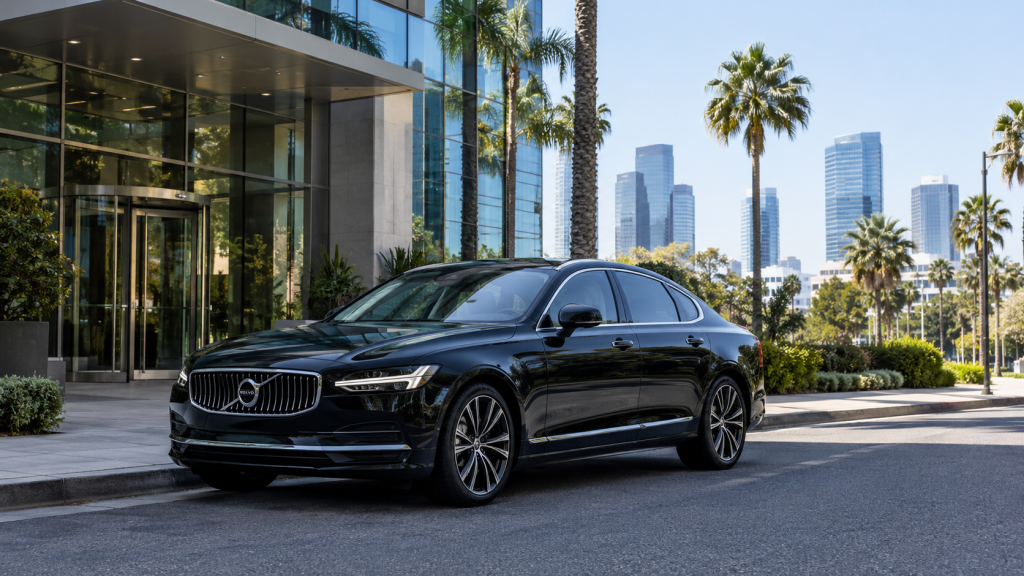
A luxury sedan such as a Volvo S90 may suit an individual executive or a small number of passengers traveling light. An SUV such as a Cadillac Escalade or Chevrolet Suburban may be more suitable when additional passenger or luggage space is needed. A Mercedes Sprinter or minibus may be worth considering for a larger group, subject to the provider’s available fleet and the exact booking requirements.
Before confirming, verify the specific vehicle, passenger capacity, luggage capacity, and availability for your date.
Also consider practical needs that may affect the booking:
Will passengers travel with presentation materials or luggage?
Does anyone require step-free access or a particular type of assistance?
Is the group traveling together to every stop?
Will the vehicle need to accommodate additional passengers later?
Are there building access or loading restrictions at the destinations?
Do not select a larger vehicle solely for appearance if a smaller one better suits the itinerary. The right choice is the vehicle that meets the day’s practical requirements.
Time between appointments can be useful for reviewing documents, preparing questions, checking messages, or taking a short break. However, it should not be treated as guaranteed working time.
Traffic can interrupt calls, a journey may take longer than expected, and some conversations or documents may require a level of privacy that is not appropriate in every transportation setting.
If you plan to work while traveling:
Download important documents in advance.
Prepare meeting notes before entering the vehicle.
Keep your next appointment’s address and contact details accessible.
Use a hands-free setup where legally permitted and safe.
Avoid handling confidential information in a way that exposes it to others.
Leave enough time to review materials after arrival.
A chauffeur service can allow you to focus on preparation rather than driving, but it cannot guarantee a quiet environment, uninterrupted connectivity, or a specific arrival time.
For a demanding schedule, the main benefit is often reducing the number of transportation tasks you need to manage personally.
The most useful comparison is the total transportation cost for the entire itinerary, not the cheapest individual trip.
For a self-driven day, account for vehicle rental or ownership costs, fuel, parking, and any tolls. For rideshare or taxis, estimate each leg and consider the possibility of changes in fares or availability. For hourly chauffeur service, compare the written quote with the total reserved hours and all applicable charges.
Ask providers to clarify:
The hourly rate or quoted itinerary price.
Minimum booking duration.
Whether waiting time is included.
Overtime and extension rates.
Parking, tolls, and other potential charges.
Cancellation and itinerary-change policies.
Whether the quote covers all planned stops.
Vehicle type and passenger capacity.
A dedicated vehicle may offer operational convenience, but whether it represents good value depends on the specific schedule and price. A day with two nearby appointments may not justify an hourly booking, while a tightly coordinated itinerary with several destinations may make it more attractive.
Compare equivalent services and conditions before deciding.
A few planning errors can create unnecessary stress during a business day in Los Angeles.
Scheduling meetings too close together. A short drive estimate does not account for parking, building access, or traffic changes. Add time for the full arrival process.
Crossing the city repeatedly. Alternating between Downtown, the Westside, and distant suburbs can add avoidable travel. Group appointments geographically whenever the fixed schedule allows.
Ignoring airport logistics. Landing time is not the same as the time you will be ready to leave the airport. Include baggage collection and pickup coordination.
Choosing transportation based only on the first fare. Compare the complete day’s costs, including parking, multiple rides, waiting time, and any booking minimums.
Failing to confirm exact addresses. A company name or neighborhood is not always enough to identify the correct building entrance.
Assuming a vehicle can be extended indefinitely. If your schedule may run late, confirm extension policies and availability in advance.
Forgetting to communicate changes. Late updates can affect routing, pickup arrangements, and subsequent appointments.
Overloading the itinerary. If there is no room for travel delays or a meeting that runs over, the plan is fragile. Fewer well-organized appointments can be more productive than a packed schedule.
Use this checklist the day before your appointments.
Confirm every meeting’s address, time, duration, and host.
Mark fixed commitments and identify flexible appointments.
Group stops by geographic area where possible.
Check estimated travel times for the expected departure periods.
Add buffers for traffic, parking, check-in, and security.
Confirm airport pickup details if a flight is involved.
Decide whether to drive, use individual rides, take public transit, or reserve a chauffeur.
Compare the full cost of each realistic option.
Confirm the vehicle and passenger or luggage requirements.
Share the final itinerary with your driver or transportation provider.
Keep contact details and booking confirmations accessible.
Recheck traffic and relevant airport information on the day.
Communicate any changes promptly.
A successful multi-stop business day starts with a realistic schedule, sensible geographic routing, and transportation that fits the work you need to accomplish. Group nearby meetings, protect important arrival times, and leave enough room for the unexpected.
If your itinerary includes several offices, client meetings, a hotel, or an airport transfer, Ogun Limo offers corporate transportation and hourly chauffeur service in Los Angeles. Share your planned stops, preferred schedule, passenger count, and vehicle needs to discuss an arrangement that fits your day.
Visit Ogun Limo or explore hourly chauffeur service and corporate transportation to request information or a quote.
Start with fixed appointments, group nearby destinations, estimate travel times for the expected departure periods, and add buffers for traffic and building access. Choose transportation based on the number of stops, total cost, and how much flexibility your schedule requires.
It can be worthwhile when you have several stops, need a vehicle available throughout a defined period, or want to avoid coordinating separate rides and parking. Compare the hourly quote, minimum booking period, waiting time, and additional charges against the total cost of other options.
There is no single travel buffer that works for every route. Consider the addresses, departure time, current traffic estimates, parking or drop-off arrangements, building access, and the consequences of arriving late. Add more contingency time for important meetings and airport connections.
Yes, if the appointment times and expected travel conditions make the itinerary realistic. Try to avoid unnecessary backtracking, and leave enough time for travel between the two areas. Check traffic estimates for the actual day and time rather than relying only on the distance between locations.
Driving, rideshare, taxis, public transit, and hourly chauffeur services can all be suitable in different circumstances. Driving offers independence, public transit can work well along connected routes, and individual rides suit simpler itineraries. An hourly chauffeur may be convenient when multiple stops require coordinated transportation.
Yes, if the flight schedule, airport pickup arrangements, meeting times, and travel distances allow enough time. Account for disembarking, baggage collection if needed, reaching the pickup point, and traveling to the first appointment. Avoid placing a critical meeting immediately after a scheduled landing.
Provide the date, pickup time and location, every planned stop, expected appointment durations, final destination, passenger count, luggage or equipment requirements, and any accessibility needs. Ask about booking minimums, waiting time, overtime, additional stops, parking, tolls, and changes to the itinerary.
It can be practical when your destinations are well connected by Metro or other transit services and the schedule allows time for transfers and walking. Check routes, service alerts, and real-time information before committing to a transit-based itinerary. For appointments spread across distant areas, compare the complete journey with other transportation options.